
WHY ASPHALT MAINTENANCE MATTERS
Your roads are critical infrastructure investments that deserve protection.
Without proper maintenance, even the best-constructed asphalt pavement will deteriorate prematurely, leading to costly repairs and reconstruction. We understand the challenges you face with tight budgets and increasing expectations from your community.
When properly maintained, your asphalt pavements can deliver their full service life and beyond. We help you implement maintenance strategies that extend pavement life by 5-10 years, significantly reducing your lifetime costs and allowing you to maintain more lane miles with your existing budget.
THE HIDDEN CAUSE OF ASPHALT DETERIORATION
Most people believe road deterioration is simply the result of traffic, weather, and time. But there’s a hidden factor making modern roads fail faster than they did 30 years ago, and it starts before the first vehicle ever drives on the pavement.
Why Modern Roads Deteriorate Faster
Modern oil refineries have gotten much better at extracting valuable compounds from crude oil. That’s great for producing gasoline and other products, but the result is that maltenes that used to end up in asphalt are now being removed.
To make matters worse, the increasing use of recycled materials in asphalt mixes exacerbates this problem.
THE RESULT? New roads start with up to 50% less maltene content than necessary to maintain proper durability levels.
Why Traditional Maintenance Approaches Fall Short
Most maintenance solutions treat only the symptoms (cracks, potholes) without addressing the underlying chemical imbalance that makes your roads brittle in the first place. They may temporarily improve appearance, but they don’t solve the fundamental problem.
Traditional approaches often disappoint because they:
Treat surface symptoms while ignoring the root chemical cause
Seal only the surface (trapping problems underneath)
Add more asphalt (which doesn’t fix the chemical balance)
Use temporary softening agents rather than true maltene replacement
Offer short-term visual improvements that quickly deteriorate
This is why you see the same roads requiring repeated maintenance—the underlying chemical imbalance remains unaddressed, and deterioration continues from the inside out.
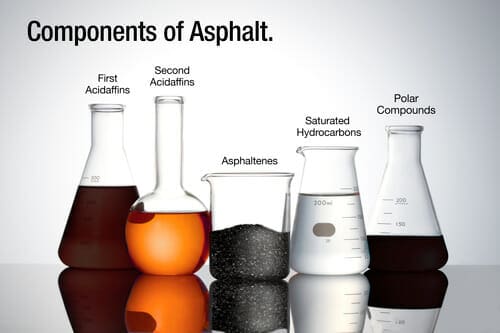
OUR SCIENTIFIC SOLUTION: MALTENE REPLACEMENT TECHNOLOGY
At Corrective Asphalt Materials, we take a different approach to pavement maintenance. Instead of merely treating symptoms like cracks and potholes, we address the root cause of deterioration—chemical imbalance.
Our maltene-based treatments restore the essential compounds your pavement needs to maintain flexibility and resist aging. This scientifically proven approach has been documented through numerous studies over 50+ years of field performance.
Proactive Preservation
(For Newer Pavements)
For pavements in good condition (PCI 80-100 or PASER 8-10), we recommend:
- Reclamite® Application: This maltene-based rejuvenator penetrates deep into the surface, replenishing maltenes lost during manufacturing and initial oxidation. Applied 1-2 years after new construction or overlay, it extends pavement life by 5-7 years.
- JointBond® Treatment: Construction joints are the most vulnerable part of new pavement. Our specialized joint stabilizer prevents premature failure at these critical points, extending joint life by 3-5 years.
By treating new pavements proactively, you preserve your initial investment and significantly delay the onset of deterioration. This approach keeps pavement condition ratings higher for longer periods of time, ultimately saving you money and resources.
Reactive Preservation
(For Aging Pavements)
For pavements showing early signs of aging (PCI 60-70 or PASER 6-7), we recommend:
- CRF® (Corrective Restorative Fluid): This dual-action formula combines maltene replacement with surface renewal. It addresses both the chemical deficiency and surface-level problems, extending the life of aging pavements by 5-10 years.
- CRF® for Centerlines and Rumble Strips: These high-stress areas deteriorate faster than general pavement. Targeted CRF applications prevent water intrusion and further deterioration.
Asphalt Maintenance candidate
We’ve developed a comprehensive maintenance timeline based on decades of field experience and scientific testing.
This approach maximizes pavement life and minimizes lifecycle costs:
PCI 80-100
- Replenish maltene fraction with Reclamite
- Stabilize construction joints with JointBond
PCI 60-80
- Heal centerline with CRF
- Seal rumble strips with CRF
This strategic approach allows you to:
- Extend pavement life by 50-100%
- Reduce lifecycle costs by up to 50%
- Maintain more lane miles with existing budgets
- Create predictable, manageable maintenance cycles
- Get ahead of the maintenance curve instead of constantly falling behind
SCIENTIFIC EVIDENCE SUPPORTING OUR APPROACH
Our approach isn’t just theoretical—it’s backed by extensive research and field performance. For example, a comprehensive study in Springfield, Missouri documented these impressive results:
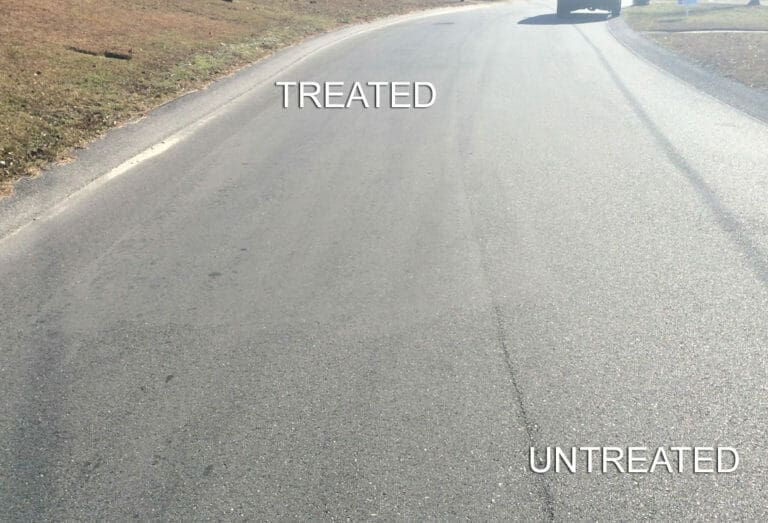
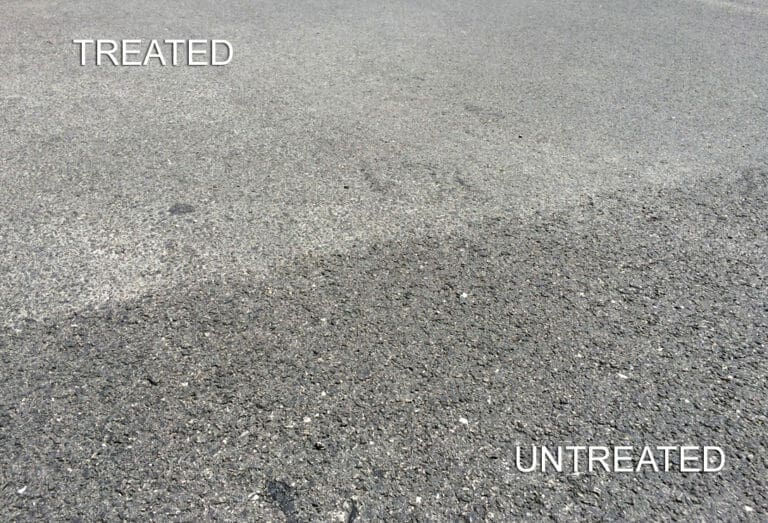
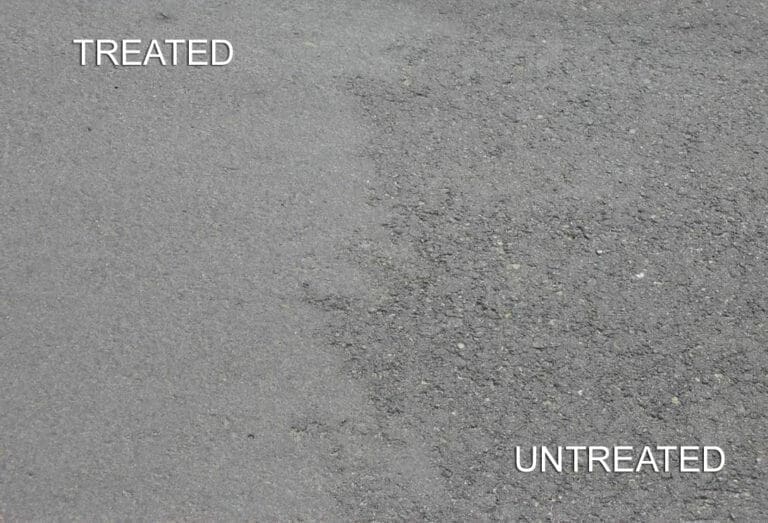
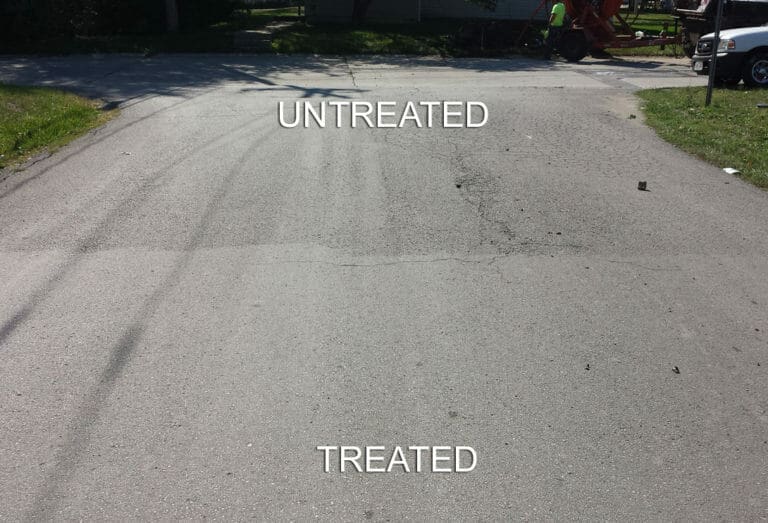
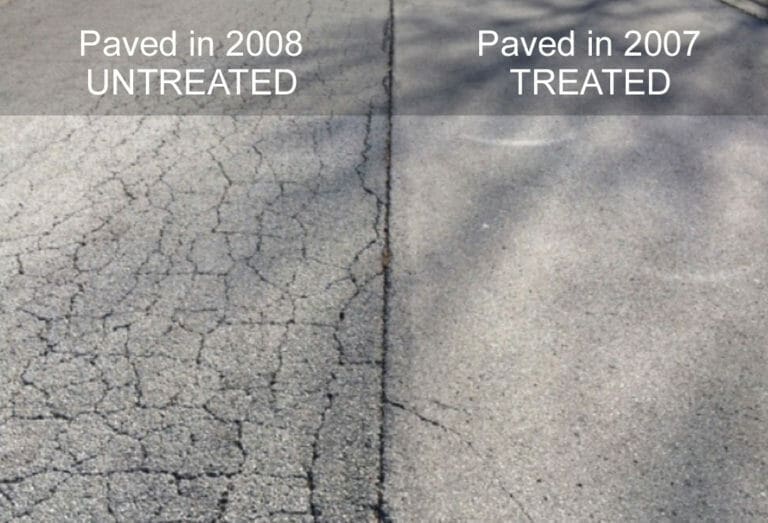
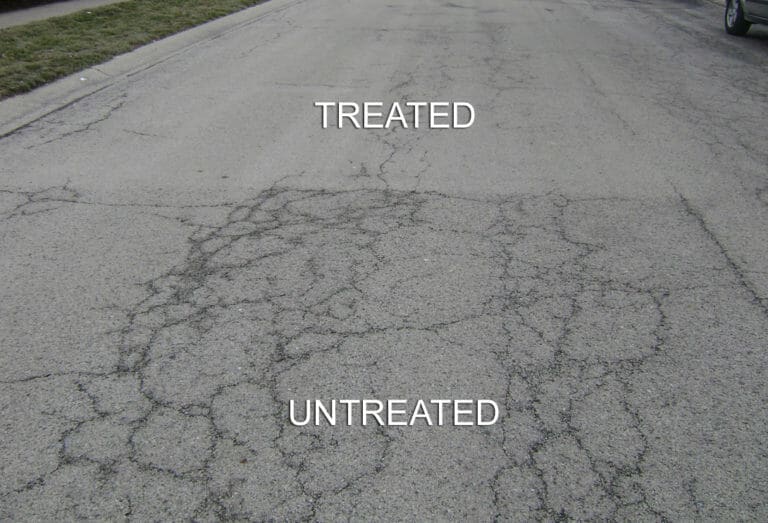
- Short-Term Effectiveness: Roads treated with Reclamite showed dramatic improvements after just 3 months, with viscosity decreases of 56-63% compared to untreated sections.
- Medium-Term Sustainability: Three years after treatment, these same roads still maintained 46-54% lower viscosity.
- Long-Term Performance: Most impressively, CRF-treated sections still showed a 37% viscosity reduction even after 9 years of service.
- Visual Verification: Side-by-side comparisons showed clear “mending” and “healing” on treated surfaces compared to untreated control sections.
GET A FREE PAVEMENT EVALUATION AND TREATMENT PROGRAM
Let our engineers evaluate your pavement network and develop a customized maintenance program that maximizes the life of your roads while minimizing your long-term costs. Our approach is based on scientific principles, not quick fixes, and is tailored to your specific climate, traffic conditions, and budget constraints.
Get a Free Evaluation